










The ketogenic diet can be powerful—but it’s not meant to be permanent for everyone. One of the most advanced (and rarely discussed) skills in Keto Diet Mastery is knowing when to stop keto and, more importantly, how to transition safely without rebound weight gain, cravings, or metabolic damage.
At My Diet Way, we see this mistake often: people stay on keto too long, ignore warning signs, and then quit abruptly—leading to rapid weight regain and frustration. Keto doesn’t fail here; the exit strategy does.
This guide explains when keto is no longer serving you, the biological signals to watch for, and how to transition in a controlled, sustainable way.
First: Is Keto Failing—or Is Your Body Asking for Adjustment?
Not every plateau or low-energy phase means you should quit keto.
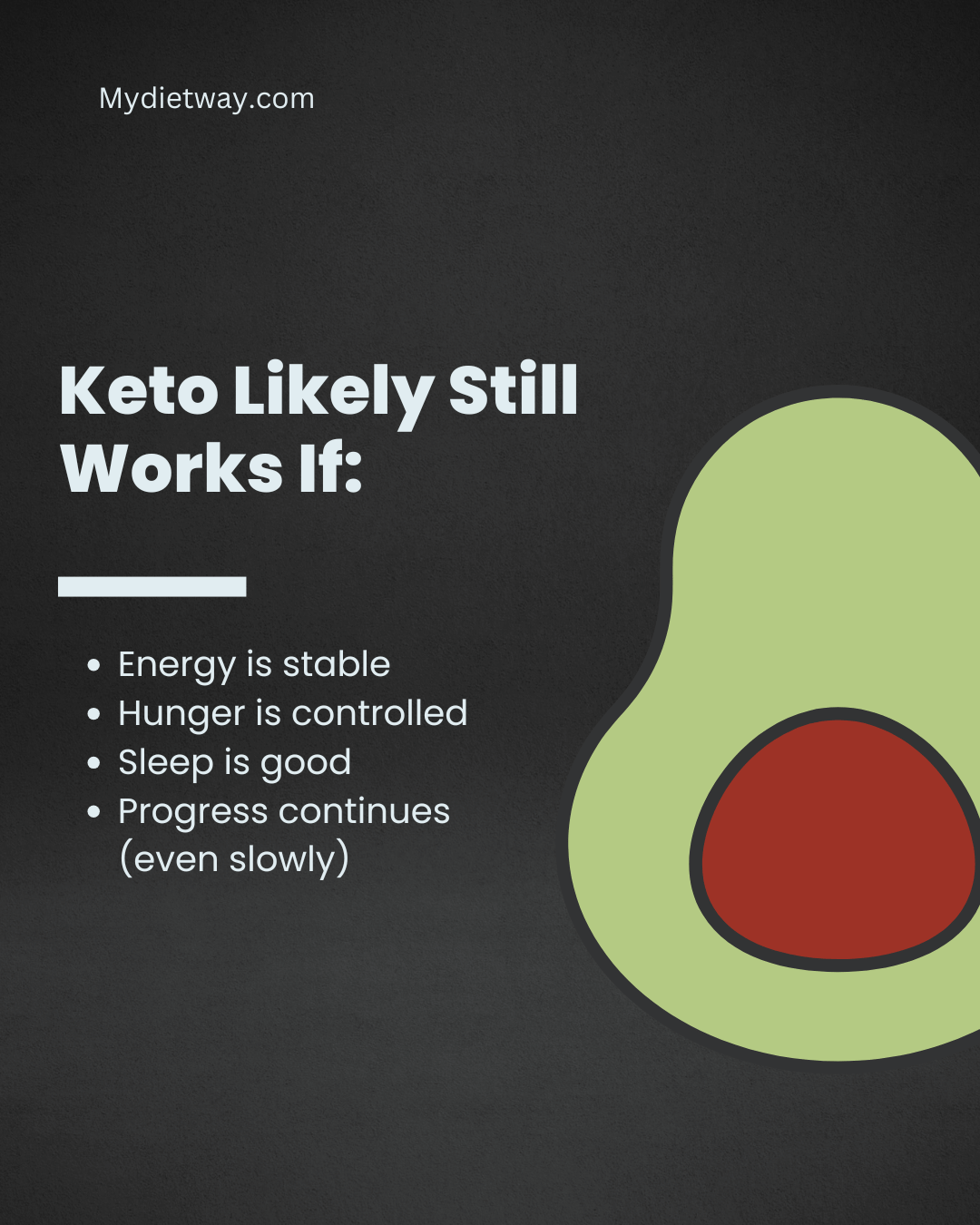
Keto Likely Still Works If:
-
Energy is stable
-
Hunger is controlled
-
Sleep is good
-
Progress continues (even slowly)
When to Stop Keto
Keto May Be Time-Limited If:
-
Fatigue becomes chronic
-
Sleep quality worsens
-
Hormonal symptoms appear
-
Performance declines
-
Weight loss has stalled for months
Keto should feel supportive, not exhausting.
👉 Related read: Keto Plateaus Explained: Why Weight Loss Stops
Common Signs It’s Time to Stop (or Pause) Keto
1. Persistent Low Energy Despite Proper Intake
If you’re eating enough calories, protein, electrolytes—and still feel drained—your body may need metabolic flexibility.
2. Hormonal Disruption
Possible signs include:
-
Irregular cycles (women)
-
Increased stress response
-
Sleep disturbances
-
Cold sensitivity
👉 Related article: Can Hormones Sabotage Your Diet? What Science Says
3. Declining Exercise Performance
Keto supports endurance well—but some people struggle with strength or high-intensity training long-term.
If performance consistently declines, keto may no longer match your training demands.
👉 Related read: Signs Your Diet Doesn’t Match Your Body Type
4. You’ve Achieved Your Primary Goal
If your goal was:
-
Fat loss
-
Metabolic reset
-
Appetite control
…and it’s been achieved, keto may no longer be necessary.
Diets are tools, not identities.
When to Stop Keto
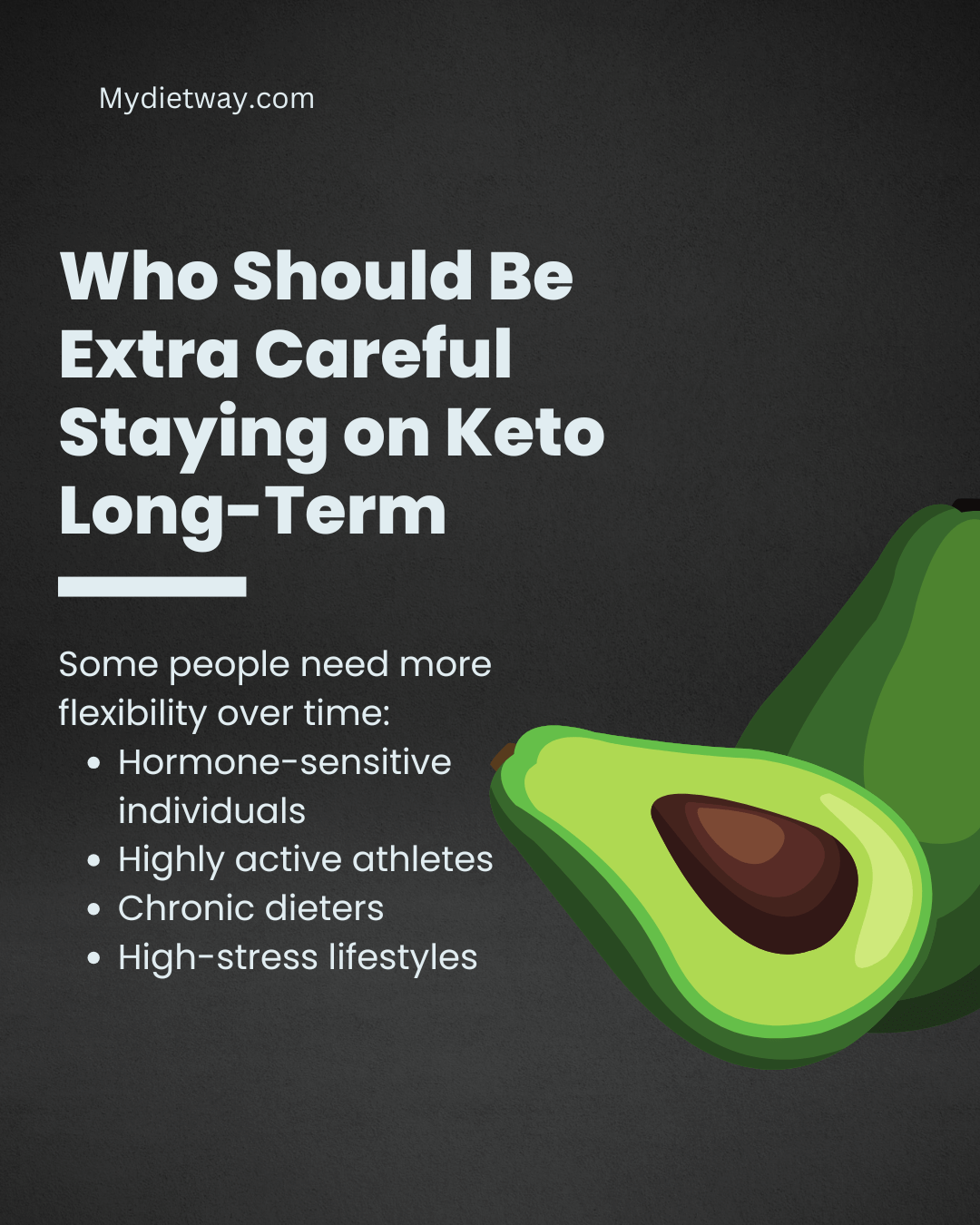
Who Should Be Extra Careful Staying on Keto Long-Term
Some people need more flexibility over time:
-
Hormone-sensitive individuals
-
Highly active athletes
-
Chronic dieters
-
High-stress lifestyles
For these groups, long-term strict keto can backfire.
👉 Related read: How Age Changes Your Nutritional Needs
Why Stopping Keto Abruptly Causes Weight Regain
Most keto rebound weight gain is not fat—it’s glycogen and water returning.
Problems With Abrupt Transition
-
Sudden carb overload
-
Insulin spikes
-
Digestive distress
-
Loss of appetite control
The body panics—not because carbs are bad, but because the transition is too fast.
How to Transition Off Keto Safely (Step-by-Step)
Step 1: Increase Protein First (Not Carbs)
Before adding carbs, stabilize your foundation.
Why:
-
Prevents muscle loss
-
Controls hunger
-
Maintains metabolic rate
Protein should remain the anchor.
Step 2: Add Carbs Slowly and Strategically
Start with low-glycemic, whole-food carbs.
Best First Carbs
-
Berries
-
Sweet potatoes
-
Oats (small portions)
-
Legumes
Add 10–20g net carbs per week, not per day.
👉 Related read: Clean Keto vs Dirty Keto: Does Food Quality Matter?
Step 3: Reduce Fat as Carbs Increase
This is critical.
If carbs go up without fat coming down, calorie surplus occurs.
Simple rule:
As carbs rise, added fats must fall.
Step 4: Watch Hunger, Energy, and Sleep (Not the Scale)
Scale fluctuations are normal.
Focus instead on:
-
Hunger stability
-
Energy consistency
-
Digestion
-
Sleep quality
These are better indicators of success.
Step 5: Reintroduce Training Fuel (If Needed)
If you train:
-
Add carbs around workouts
-
Keep rest days lower-carb
-
Match intake to demand
This creates metabolic flexibility without fat gain.
Transition Options (Choose What Fits You)
| Approach | Best For |
|---|---|
| Low-carb (not keto) | Long-term sustainability |
| Cyclical keto | Active individuals |
| Targeted keto | Performance-focused |
| Balanced diet | Hormone-sensitive bodies |
There is no single “correct” exit—only a safe one.
What NOT to Do When Stopping Keto
❌ Add sugar and refined carbs first
❌ Increase carbs and fat together
❌ Quit structure entirely
❌ Panic at scale changes
These cause rebound—not carbs themselves.
How Long Should the Transition Take?
A 2–6 week transition works best for most people.
Longer if:
-
You’ve been keto for months or years
-
You have hormonal or metabolic issues
Slower transitions protect results.
How My Diet Way Handles Keto Transitions
At My Diet Way, we teach that ending keto is just as important as starting it.
Our transition approach focuses on:
-
Metabolic preservation
-
Hormonal balance
-
Sustainable eating patterns
-
Long-term success
🌿 Learn more at: https://mydietway.com/
Frequently Asked Questions (FAQ)
Will I regain weight after stopping keto?
Temporary water weight is normal. Fat gain is preventable with a smart transition.
Is keto bad long-term?
Not inherently—but it’s not optimal for everyone indefinitely.
Can I return to carbs without cravings?
Yes—when carbs are added gradually and strategically.
Should I stop keto if weight loss slows?
Not always. First assess stress, calories, and protein.
Can I cycle keto long-term?
Yes—many people thrive with cyclical or targeted approaches.
Final Thoughts
Knowing when to stop keto and how to transition safely is the hallmark of true Keto Diet Mastery. Keto is not a finish line—it’s a phase. When you exit with intention instead of emotion, you keep the benefits and avoid the backlash.
Use keto as a tool.
Respect your body’s signals.
And transition with strategy—not fear.
That’s how results last at My Diet Way 🥑
Resources that help me
- Diet Doctor – How to Stop Keto Safely
https://www.dietdoctor.com/low-carb/keto/how-to-stop-keto - Healthline – What Happens When You Stop Keto
https://www.healthline.com/nutrition/what-happens-when-you-stop-keto - Cleveland Clinic – Is Keto Safe Long Term?
https://health.clevelandclinic.org/is-keto-diet-safe/ - Harvard Health – Low-Carb Diets and Metabolic Health
https://www.health.harvard.edu/staying-healthy/low-carb-diets-what-you-need-to-know