






Few things are more frustrating than doing keto “by the book” and watching the scale refuse to move. You’re low-carb, in ketosis, consistent—and yet nothing happens. This is where understanding keto plateaus becomes critical.
Keto plateaus explained simply: weight loss stops not because keto stopped working, but because your body adapted. Plateaus are not failure—they’re feedback.
At My Diet Way, we treat plateaus as a signal to optimize, not panic. This guide explains why weight loss stalls on keto, the science behind it, and how to break plateaus without extreme tactics that damage metabolism or hormones.
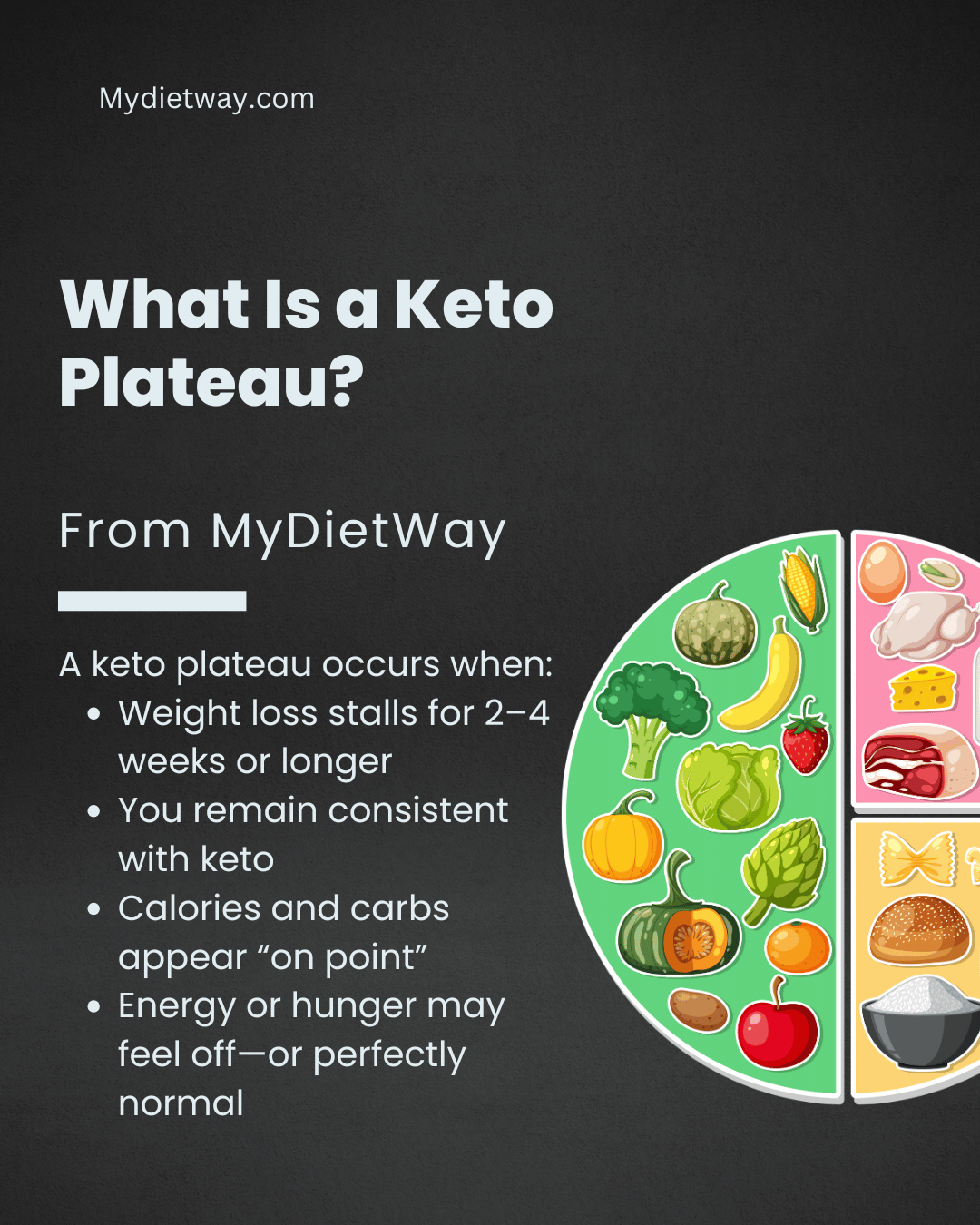
What Is a Keto Plateau?
A keto plateau occurs when:
- Weight loss stalls for 2–4 weeks or longer
- You remain consistent with keto
- Calories and carbs appear “on point”
- Energy or hunger may feel off—or perfectly normal
Plateaus can happen at any stage of keto: early, mid-adaptation, or long-term.
A plateau means your body has adjusted. Your strategy needs to adjust too.
First: Is It a Real Plateau or Just Normal Fluctuation?
Before changing anything, rule this out.
Not a True Plateau If:
- It’s been less than 10–14 days
- Measurements are changing
- Clothes fit differently
- Strength or endurance improves
Keto often shifts body composition before the scale moves.
👉 Related read: Keto Adaptation Timeline: What Happens Week by Week
The Real Reasons Keto Weight Loss Stops
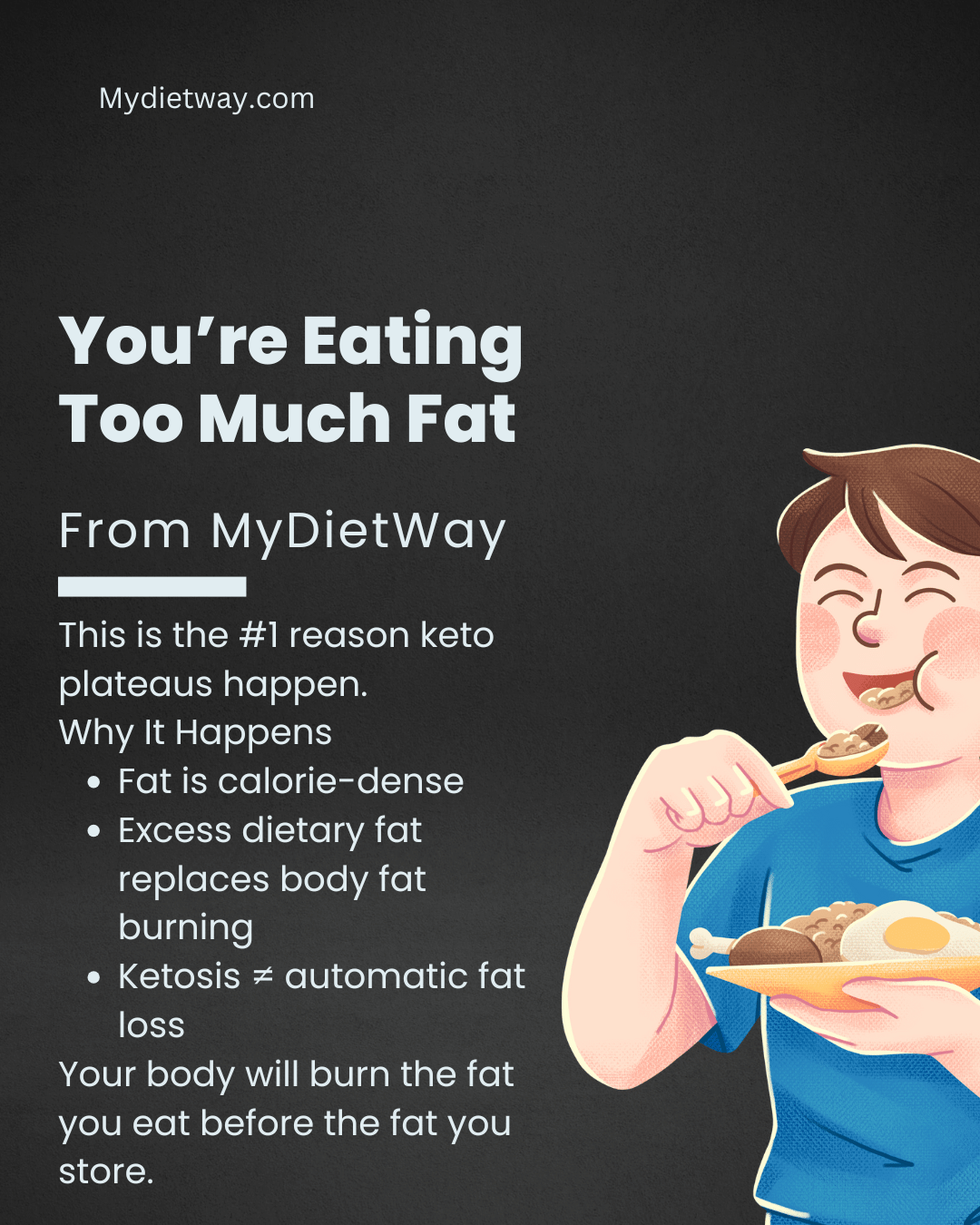
1. You’re Eating Too Much Fat
This is the #1 reason keto plateaus happen.
Why It Happens
- Fat is calorie-dense
- Excess dietary fat replaces body fat burning
- Ketosis ≠ automatic fat loss
Your body will burn the fat you eat before the fat you store.
Fix
- Keep fat for satiety, not excess
- Prioritize protein
- Let hunger guide fat intake—not habit
2. Calories Still Matter (Even on Keto)
Ketosis doesn’t override energy balance.
Why Keto Plateaus Here
- Appetite drops → portions stay large
- “Keto snacks” add up fast
- Liquid calories sneak in
Even small surpluses can halt fat loss once adaptation occurs.
Fix
- Tighten portions gently
- Avoid aggressive calorie cuts
- Track for awareness—not obsession
👉 Related article: How to Avoid the Most Common Keto Mistakes
3. You’re Under-Eating Protein
Protein is often misunderstood on keto.
Low Protein Causes
- Muscle loss
- Slower metabolism
- Reduced thermic effect
- Increased hunger
This makes fat loss harder over time—even in ketosis.
Fix
- Eat protein first at every meal
- Adjust based on activity level
- Don’t fear protein kicking you out of ketosis
👉 Internal link: How Metabolism Speed Affects Your Ideal Diet Choice
4. Stress and Cortisol Are Blocking Fat Loss
You cannot out-keto stress.
How Stress Creates Plateaus
- Raises cortisol
- Increases insulin resistance
- Promotes abdominal fat storage
- Disrupts sleep
Many plateaus have nothing to do with food.
Fix
- Reduce training intensity temporarily
- Improve sleep before cutting calories
- Eat consistently (avoid long fasts under stress)
5. You’re Still Adapting (But Think You’re Done)
Fat adaptation takes longer than most people expect.
During Mid-Adaptation:
- Weight loss may pause
- Energy improves before fat loss resumes
- Body prioritizes metabolic efficiency
This is normal, especially weeks 3–5.
Fix
- Stay consistent
- Don’t stack changes too fast
- Focus on measurements and energy
6. Too Much Cardio, Not Enough Strength
Cardio burns calories—but too much raises cortisol and burns muscle on keto.
Common Plateau Pattern
- High cardio volume
- Low strength training
- Muscle loss → lower metabolism
Fix
- Prioritize resistance training
- Reduce excessive cardio
- Support workouts with enough protein
👉 Related article: Signs Your Diet Doesn’t Match Your Body Type
7. Electrolyte Imbalance Is Slowing You Down
Low sodium, potassium, or magnesium doesn’t just cause keto flu—it can stall fat loss.
Why This Matters
- Poor training performance
- Increased fatigue
- Water retention masking fat loss
Fix
- Increase sodium intake
- Stay hydrated
- Eat mineral-rich foods
@iricksnacks Say “YES” if you’ve ever struggled with a weight-loss stall on keto or low carb 🙋♂️ Whenever people run into this issue, they always ask me if eating more fat will solve the problem.. And the answer is usually the exact opposite! Because the truth is.. keto isn’t a magical diet that makes calories irrelevant if you just eat enough fat 🤯 It simply limits your options to nutrient dense foods like meat and veggies, and that typically results in less over-eating. And less over-eating paired with less carbs means your body uses your stored fat for energy which equals WEIGHT LOSS! But if you find yourself mindlessly eating nuts and keto treats all day, you won’t be burning stored fat, because you’re getting more than enough of it from food. So the best way to lose weight on low carb aside from also tracking calories which is pretty overwhelming for most people. Is to focus on getting plenty of meat, eggs and veggies (REAL FOOD) and then using just enough fat to make that stuff taste good. 👍 Btw.. this strategy does not mean you end up eating low fat. Because if you’re eating fatty cuts of meat and plenty of eggs you will get LOTS of fat and be in Ketosis! It’s more that you will try to minimize (not fully eliminate) the unnecessary fats like ranch, mayo & cream cheese & prioritize the satiating ones like STEAK 🙌
8. You’ve Been on Keto Too Long Without Adjustment
Keto is powerful—but not always meant to be static forever.
Long-Term Keto Plateaus May Signal:
- Hormonal adaptation
- Thyroid down-regulation
- Chronic calorie suppression
Fix Options
- Protein recalibration
- Strategic carb refeed
- Transition to cyclical or targeted keto
👉 Important read: When to Stop Keto (and How to Transition Safely)
Keto Plateau Troubleshooting Table
| Plateau Cause | Primary Fix |
|---|---|
| Too much fat | Reduce added fats |
| Low protein | Increase protein |
| Stress | Improve sleep & recovery |
| Over-cardio | Add strength training |
| Electrolytes | Rebalance minerals |
| Long-term adaptation | Strategic flexibility |
What NOT to Do During a Keto Plateau
❌ Slash calories aggressively
❌ Add hours of cardio
❌ Panic and quit keto immediately
❌ Copy someone else’s “plateau breaker”
These often worsen the plateau.
Smart Ways to Break a Keto Plateau
Sustainable Plateau Breakers
- Protein-first meals
- Slight calorie cycling
- Deload training week
- Improved sleep consistency
- Reassessing food quality
Plateaus respond best to precision, not punishment.
How My Diet Way Handles Keto Plateaus
At My Diet Way, we don’t treat plateaus as problems—we treat them as checkpoints.
Our approach focuses on:
- Hormone-aware adjustments
- Metabolic preservation
- Long-term sustainability
- Personalized keto strategies
🌿 Learn more at: https://mydietway.com/
Frequently Asked Questions (FAQ)
How long is too long for a keto plateau?
If nothing changes for 3–4 weeks, it’s time to reassess.
Should I cut carbs further to break a plateau?
Rarely. Most plateaus are not carb-related.
Can ketosis stall fat loss?
Ketosis supports fat loss—but excess calories or stress can override it.
Is a plateau a sign keto stopped working?
No. It’s a sign your body adapted.
Do women experience keto plateaus differently?
Yes—hormones, stress, and cycle phases matter.
Final Thoughts
Understanding keto plateaus explained is essential for anyone serious about Keto Diet Mastery. Plateaus are not the enemy—they’re part of the process. When you stop reacting emotionally and start responding strategically, progress returns.
Keto works best when it’s adjusted, not abandoned.
That’s how fat loss becomes sustainable—
and how keto becomes a long-term tool at My Diet Way 🥑