







The ketogenic diet can be powerful—but only when done correctly. Most people don’t fail keto because it “doesn’t work.” They fail because of avoidable keto mistakes that slow fat loss, drain energy, or make the diet unsustainable.
At My Diet Way, we focus on Keto Diet Mastery—not beginner shortcuts. This guide breaks down the most common keto mistakes, explains why they happen, and shows you exactly how to avoid them so keto works with your body, not against it.
If keto hasn’t worked for you before, this article may explain why.
Why Most People Struggle on Keto
Keto changes your metabolism, hormones, electrolytes, and fuel usage. When those changes aren’t respected, symptoms appear—fatigue, plateaus, cravings, or burnout.
Keto is not just low-carb eating. It’s metabolic management.
Avoiding mistakes early (and correcting them later) is the difference between short-term results and long-term success.
1. Eating Too Many Calories “Because It’s Keto”
One of the biggest keto myths is that calories don’t matter.
Why This Is a Problem
-
Fat is calorie-dense
-
Excess dietary fat can block body fat burning
-
Weight loss stalls despite being in ketosis
Ketosis does not override energy balance.
What to Do Instead
-
Use fat for satiety, not unlimited fuel
-
Let body fat provide part of your energy
-
Adjust portions once appetite stabilizes
👉 Related article: Keto Plateaus Explained: Why Weight Loss Stops
2. Not Eating Enough Protein
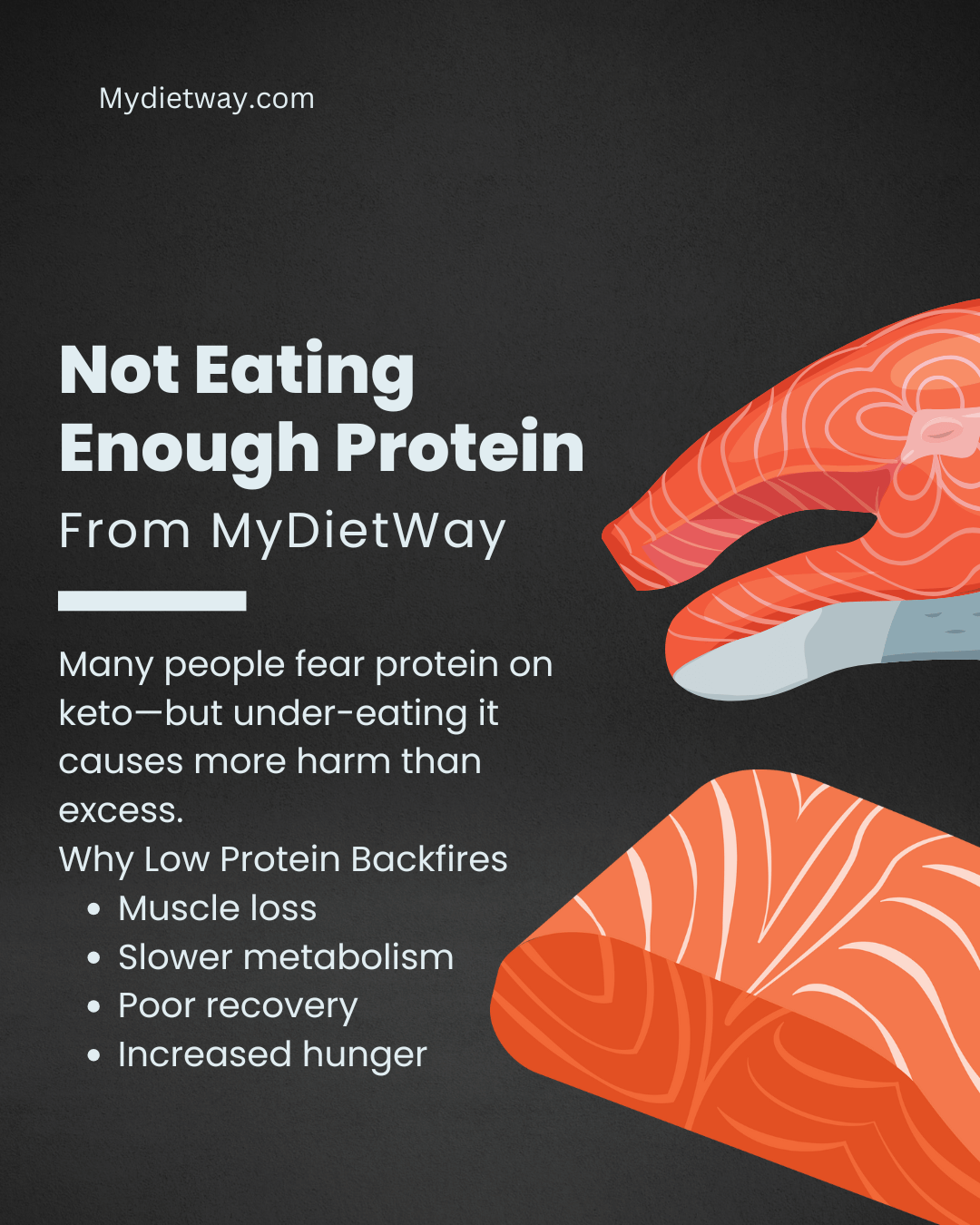
Many people fear protein on keto—but under-eating it causes more harm than excess.
Why Low Protein Backfires
-
Muscle loss
-
Slower metabolism
-
Poor recovery
-
Increased hunger
Protein supports fat loss, hormonal balance, and metabolic rate.
Fix This Mistake
-
Prioritize protein at every meal
-
Adjust based on activity level
-
Don’t fear gluconeogenesis—it’s demand-driven
👉 Internal link: How Metabolism Speed Affects Your Ideal Diet Choice
3. Ignoring Electrolytes (The Real Cause of Keto Flu)
“Keto flu” is not carb withdrawal—it’s electrolyte imbalance.
What Happens
-
Insulin drops
-
Sodium and water are flushed
-
Potassium and magnesium decline
Symptoms
-
Headaches
-
Dizziness
-
Fatigue
-
Heart palpitations
How to Avoid It
-
Increase sodium intake
-
Drink water consistently
-
Eat mineral-rich foods
Most keto symptoms disappear when electrolytes are corrected.
4. Cutting Carbs Too Aggressively, Too Fast
Going from very high-carb to near-zero carbs overnight shocks the system.
Why This Slows Progress
-
Increases cortisol (stress hormone)
-
Worsens fatigue
-
Disrupts sleep
-
Raises cravings
Smarter Approach
-
Gradual carb reduction if needed
-
Focus on food quality first
-
Reduce refined carbs before total carbs
👉 Related read: Can Hormones Sabotage Your Diet? What Science Says
5. Doing Too Much Cardio During Keto Adaptation
Keto changes how your muscles fuel exercise—especially in the early weeks.
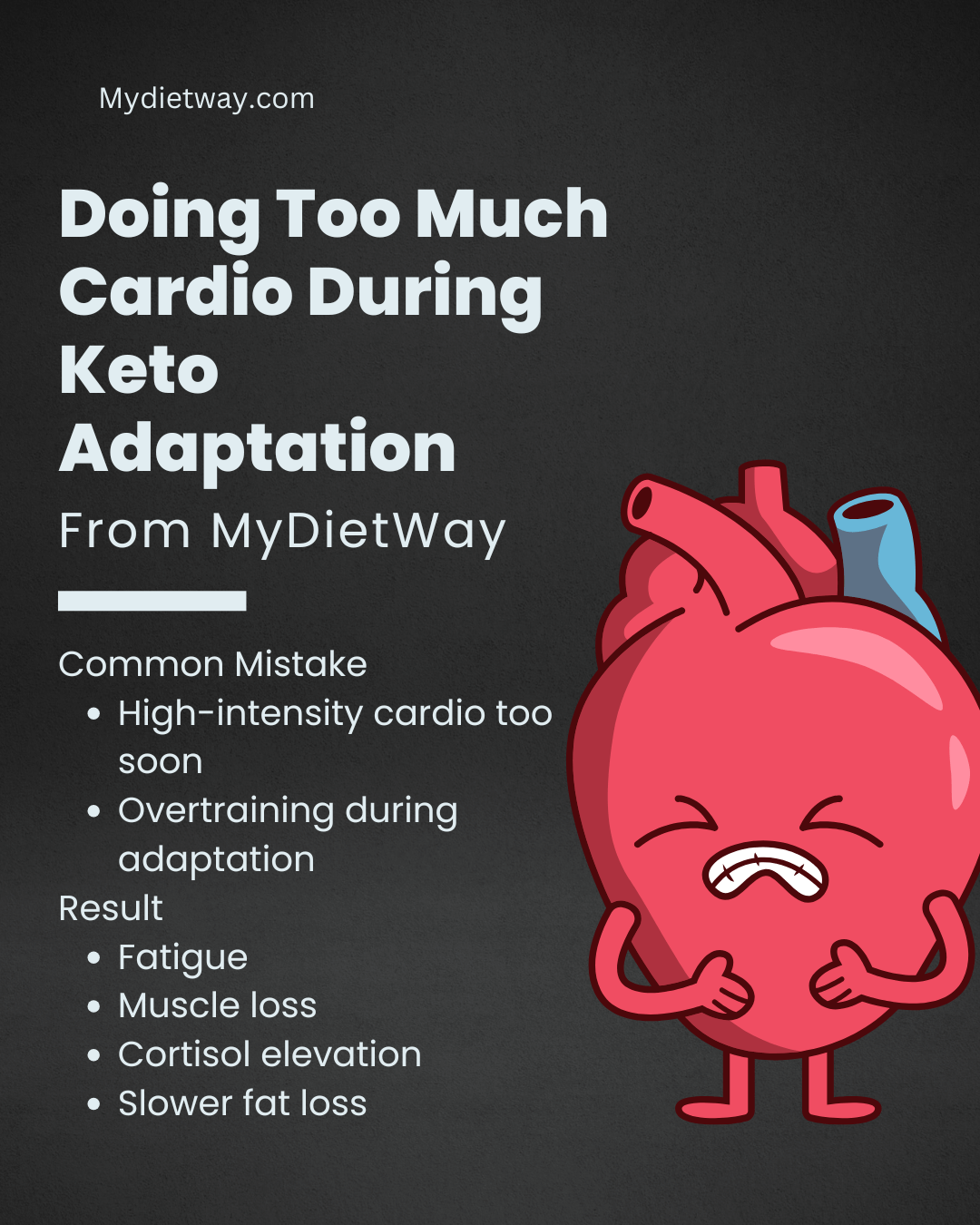
Common Mistake
-
High-intensity cardio too soon
-
Overtraining during adaptation
Result
-
Fatigue
-
Muscle loss
-
Cortisol elevation
-
Slower fat loss
Better Strategy
-
Walk more, sprint less (early weeks)
-
Add strength training gradually
-
Let fat adaptation develop first
👉 Related article: Keto Adaptation Timeline: What Happens Week by Week
6. Confusing “Dirty Keto” With Sustainable Keto
Technically, you can stay in ketosis eating processed foods—but that doesn’t mean it’s healthy.
Dirty Keto Problems
-
Inflammation
-
Poor gut health
-
Micronutrient deficiencies
-
Hunger despite calories
Ketosis is a metabolic state—not a guarantee of health.
👉 Related read: Clean Keto vs Dirty Keto: Does Food Quality Matter?
7. Not Getting Enough Fiber
Low-carb does not mean low-fiber.
Why Fiber Matters on Keto
-
Supports digestion
-
Feeds gut bacteria
-
Improves blood sugar control
-
Reduces cravings
Keto-Friendly Fiber Sources
-
Leafy greens
-
Avocado
-
Seeds
-
Low-carb vegetables
Poor digestion is a sign of imbalance—not adaptation.
8. Expecting Linear Weight Loss
Weight loss on keto is non-linear.
What’s Normal
-
Fast initial water loss
-
Short plateaus
-
Body recomposition without scale change
What’s Not Normal
-
Months without progress
-
Strength loss
-
Constant fatigue
👉 Related article: Signs Your Diet Doesn’t Match Your Body Type
9. Staying on Keto Too Long Without Reassessment
Keto is a tool—not a lifetime obligation for everyone.
Signs You Need to Reassess
-
Chronic low energy
-
Poor sleep
-
Hormonal symptoms
-
Declining performance
Some bodies thrive long-term on keto. Others need flexibility.
👉 Important read: When to Stop Keto (and How to Transition Safely)
10. Ignoring Stress, Sleep, and Lifestyle
You cannot “macro” your way out of high stress.
Why This Matters
-
Stress raises cortisol
-
Cortisol blocks fat loss
-
Poor sleep worsens insulin sensitivity
Even perfect keto macros fail under chronic stress.
Most Common Keto Mistakes Summary Table
| Mistake | Result |
|---|---|
| Too much fat | Fat loss stalls |
| Too little protein | Muscle loss |
| No electrolytes | Keto flu |
| Excessive cardio | Burnout |
| Dirty keto | Inflammation |
| Ignoring stress | Hormonal resistance |
How to Do Keto the Right Way (Advanced Principles)
Sustainable Keto Focuses On:
-
Protein-first meals
-
Electrolyte balance
-
Hormone-friendly calorie deficits
-
Real-food quality
-
Flexibility when needed
Keto works best when it’s calm, not extreme.
https://www.youtube.com/shorts/nShXM3S4cQg
How My Diet Way Teaches Keto Mastery
At My Diet Way, we don’t teach keto as a rigid rulebook. We teach it as a metabolic skill.
Our approach emphasizes:
-
Long-term sustainability
-
Hormonal balance
-
Real-life flexibility
-
Personalized adjustments
🌿 Learn more at: https://mydietway.com/
Frequently Asked Questions (FAQ)
Can keto fail even if carbs are low?
Yes—calories, protein, stress, and hormones still matter.
Is keto flu mandatory?
No. It’s usually preventable with electrolytes.
Should I track macros forever?
No. Tracking is a tool, not a prison.
Is clean keto necessary?
For long-term health and sustainability—yes.
How do I know if keto is working for me?
Stable energy, controlled hunger, and steady progress are key signs.
Final Thoughts
Learning how to avoid the most common keto mistakes is what separates short-term dieting from true Keto Diet Mastery. Keto should feel supportive, not exhausting. When done correctly, it becomes a sustainable strategy—not a struggle.
Master the fundamentals.
Respect your biology.
And keto will finally work for you, not against you. 🥑
Resources
- Harvard Health – Ketogenic Diet: A Detailed Guide
- Offers science-backed explanations of how keto works, its benefits, limitations, and common challenges.
👉 https://www.health.harvard.edu/blog/ketogenic-diet-benefits-risks-2021011919927
- Offers science-backed explanations of how keto works, its benefits, limitations, and common challenges.
- Journal of Nutrition and Metabolism – Common Pitfalls in Keto and Low-Carb Diets
- Academic article covering metabolic responses, electrolyte balance, and reasons low-carb diets may fail.
👉 https://www.hindawi.com/journals/jnme/2018/6156270/
- Academic article covering metabolic responses, electrolyte balance, and reasons low-carb diets may fail.
- Mayo Clinic – Low-Carb and Keto Nutrition Tips
- Trusted medical resource explaining dietary adaptations, nutrient balance, and things to watch for when doing keto.
👉 https://www.mayoclinic.org/healthy-lifestyle/nutrition-and-healthy-eating/expert-answers/low-carb-diet/faq-20058008
- Trusted medical resource explaining dietary adaptations, nutrient balance, and things to watch for when doing keto.
- Healthline – Common Keto Mistakes and How to Fix Them
- Practical evidence-based overview of common keto issues like electrolyte imbalance, too much fat, and plateaus.
👉 https://www.healthline.com/nutrition/ketogenic-diet-mistakes
- Practical evidence-based overview of common keto issues like electrolyte imbalance, too much fat, and plateaus.