





Following a “healthy” diet but still feeling tired, hungry, bloated, or stuck at the same weight? One of the most common—and least talked about—reasons is this: your diet doesn’t match your body type.
At My Diet Way, we see this every day. People aren’t failing their diets—the diets are failing their bodies. Your body type influences how you process food, store fat, regulate hunger, and respond to calories. When your diet ignores that, progress slows or stops completely.
This guide will help you recognize the clear signs your diet doesn’t match your body type, explain why it happens, and show you how to realign your eating in a sustainable, realistic way.
Why Body Type Matters in Nutrition
Your body type reflects a mix of genetics, metabolism speed, hormone patterns, and muscle composition. These factors influence:
-
How many calories you need
-
How often you should eat
-
How you tolerate carbs and fats
-
How your body responds to restriction
A diet that works for one body type can create stress, cravings, and plateaus in another.
There is no universal “best diet”—only the best diet for your body.
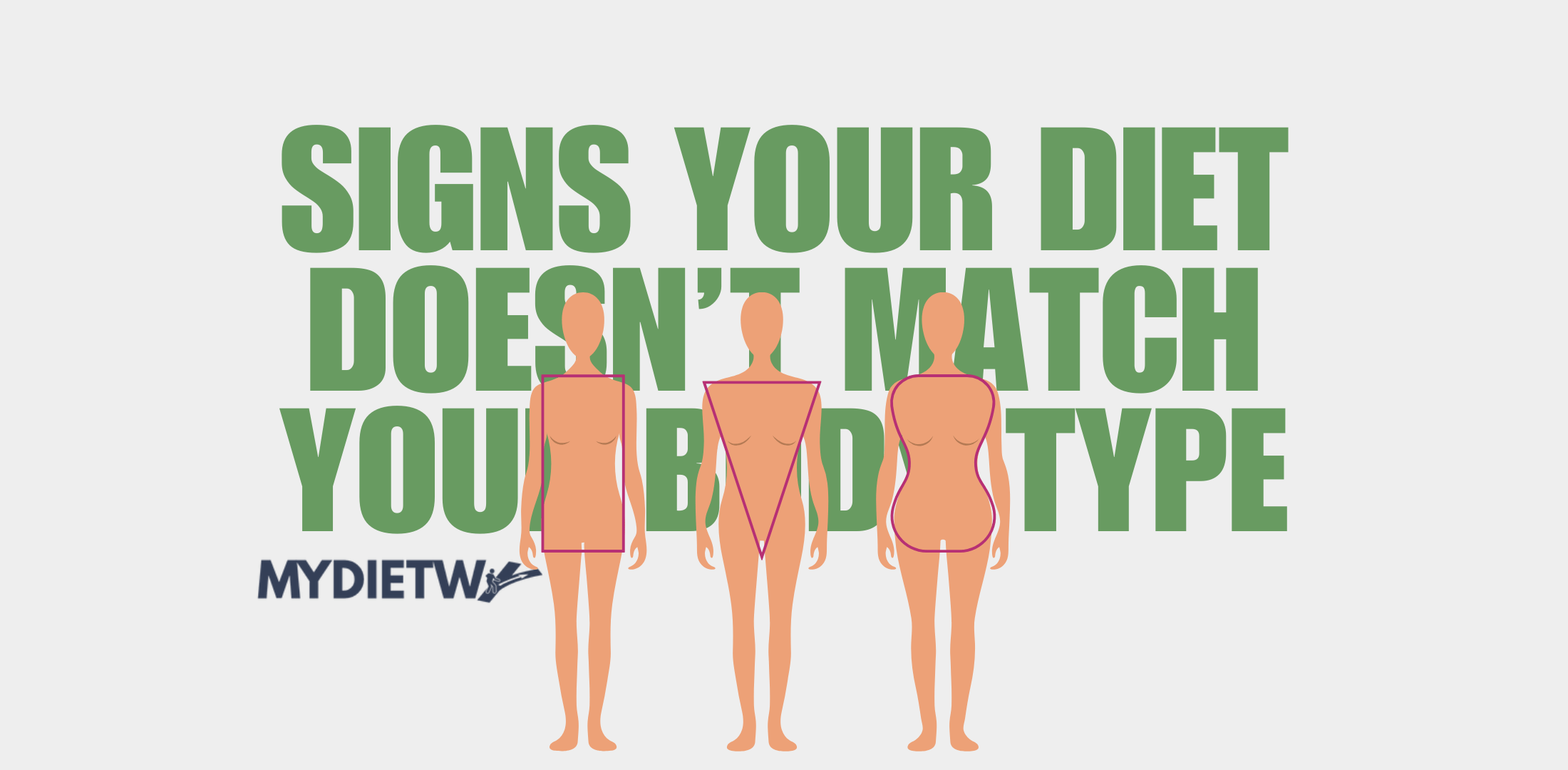
Common Body Type Categories (Simplified)
While no one fits perfectly into a box, most people lean toward one dominant pattern.
| Body Type Tendency | General Traits |
|---|---|
| Faster metabolism | Lean, high appetite, struggles to gain weight |
| Balanced metabolism | Moderate appetite, steady energy |
| Slower metabolism | Gains weight easily, strong hunger signals |
| Hormone-sensitive | Weight fluctuates with stress, sleep, cycle |
Your diet should support—not fight—these traits.
1. You’re Constantly Hungry Even After Eating
One of the strongest signs your diet doesn’t match your body type is persistent hunger.
What This Often Means
-
Too few calories for your metabolism
-
Not enough protein or fat
-
Meal timing doesn’t suit your body
Fast metabolisms, for example, suffer badly on low-calorie or fasting-heavy diets.
Fix:
Increase protein, add healthy fats, and adjust meal frequency.
👉 Related read: How Metabolism Speed Affects Your Ideal Diet Choice
2. You Feel Exhausted or Weak on Your Diet
If your diet leaves you drained instead of energized, that’s a red flag.
Possible Causes
-
Calories are too low
-
Carbohydrates are too restricted
-
Hormones are under stress
Some body types need more consistent fuel to function properly.
Fat loss should not feel like survival mode.
3. You’re Losing Muscle Instead of Fat
Seeing the scale drop but looking softer or weaker? That’s often muscle loss.
Why This Happens
-
Insufficient protein
-
Excessive calorie restriction
-
Too much cardio for your body type
Slower metabolisms and hormone-sensitive bodies lose muscle quickly when diets are too aggressive.
Fix:
Prioritize protein and resistance training.
4. Your Weight Loss Stalled for Weeks or Months
Plateaus happen—but long ones often signal a mismatch.
Common Mismatch Issues
-
Diet too restrictive for your hormones
-
Carb intake too high or too low for your insulin response
-
Stress levels blocking fat loss
👉 Internal link: Can Hormones Sabotage Your Diet? What Science Says
5. You’re Bloated, Inflamed, or Uncomfortable After Meals
Digestive discomfort is another clear sign.
Possible Reasons
-
Foods don’t suit your digestion
-
Too many raw foods or fiber
-
Poor fat or carb tolerance
A “clean” diet can still be wrong for you.
6. You Crave Sugar or Carbs Intensely
Cravings are often blamed on discipline, but biology plays a bigger role.
What This Signals
-
Blood sugar instability
-
Hormonal imbalance
-
Diet too restrictive
Body types with insulin sensitivity issues struggle on high-carb diets, while fast metabolisms struggle without enough carbs.
👉 Related article: Genetic Factors That Influence Weight Loss Success
7. Your Mood and Focus Are Worse Since Dieting
Dieting should improve mental clarity—not damage it.
Common Diet-Body Mismatches
-
Low fat intake affecting hormones
-
Low carb intake affecting brain fuel
-
Skipped meals increasing cortisol
Mood swings are biological signals, not personality flaws.
8. You Feel Cold All the Time
Feeling unusually cold is a classic sign of underfueling.
Often Seen In:
-
Slow or hormone-sensitive metabolisms
-
Long-term dieters
-
Very low-calorie plans
This can indicate thyroid suppression or energy conservation mode.
👉 Learn more: How Age Changes Your Nutritional Needs
9. Your Diet Only Works Short Term
If results disappear as soon as you stop “being strict,” the diet wasn’t compatible.
Why This Happens
-
Diet relies on willpower instead of biology
-
Too extreme for your body type
-
Not sustainable for hormones or metabolism
Long-term success requires alignment—not punishment.
10. Exercise Feels Harder Instead of Easier
Nutrition should support training, not sabotage it.
Signs of a Mismatch
-
Poor recovery
-
Strength loss
-
Increased soreness
Your body type determines how much fuel and recovery you need.
Body Type vs Diet Style: Common Mismatches
| Body Type Tendency | Diets That Often Backfire |
|---|---|
| Fast metabolism | Prolonged fasting, very low-calorie |
| Slow metabolism | High refined-carb diets |
| Hormone-sensitive | Extreme deficits, overtraining |
| Stress-prone | Irregular eating, aggressive cutting |
How to Start Matching Your Diet to Your Body Type
You don’t need a label—you need awareness.
Practical First Steps
-
Track hunger, energy, and mood (not just weight)
-
Adjust protein before cutting calories
-
Eat consistently before experimenting with fasting
-
Reduce stress before reducing food
Small adjustments often unlock stalled progress.
How My Diet Way Helps You Find the Right Match
At My Diet Way, we don’t push trends—we focus on fit. Our philosophy is built on:
-
Metabolism-aware nutrition
-
Hormone-friendly strategies
-
Sustainable eating habits
-
Real-life flexibility
Your body is not the problem. The mismatch is.
🌿 Explore more at: https://mydietway.com/
Frequently Asked Questions (FAQ)
Do I need to know my exact body type?
No. Understanding patterns is more important than labels.
Can my body type change over time?
Yes—age, hormones, stress, and muscle mass all influence it.
Why did my old diet stop working?
Your body likely changed, but your diet didn’t.
Is eating more sometimes the solution?
Yes—especially for stressed or underfueled bodies.
How long does it take to fix a mismatch?
Often weeks, not months, once the right adjustments are made.
Final Thoughts
Recognizing the signs your diet doesn’t match your body type can completely change your relationship with food. When eating supports your biology instead of fighting it, weight loss feels calmer, energy improves, and results last.
The goal isn’t perfection—it’s alignment.
And that’s exactly what My Diet Way is built to help you achieve
Resources
- Harvard Health: Personalized Nutrition Insights
This resource examines why standard diets often fail and explores the shift toward “personalized nutrition.” It discusses the evidence for tailoring diets to individual biological markers rather than following generic plans. - NASM: Body Types & Training Integration
From the National Academy of Sports Medicine, this guide focuses on fixing the mismatch between your diet and your physical activity. It details the specific protein and caloric needs for different body compositions to prevent muscle loss and fatigue