



Can hormones sabotage your diet even when you eat healthy? Learn what science says about hormones, weight loss resistance, and how to regain control naturally.
Can hormones sabotage your diet?
If you’re eating well, watching calories, and still not seeing results, this question is more than valid. Many people blame willpower or consistency, but modern science shows that hormones can strongly influence diet success, sometimes working silently against your efforts.
At My Diet Way, we see this pattern often: people doing “everything right” yet feeling stuck. The missing piece is frequently hormonal balance. This article breaks down the science in a clear, practical way—so you can understand why your diet may not be working and what to do instead.
Why Hormones Matter More Than Calories Alone
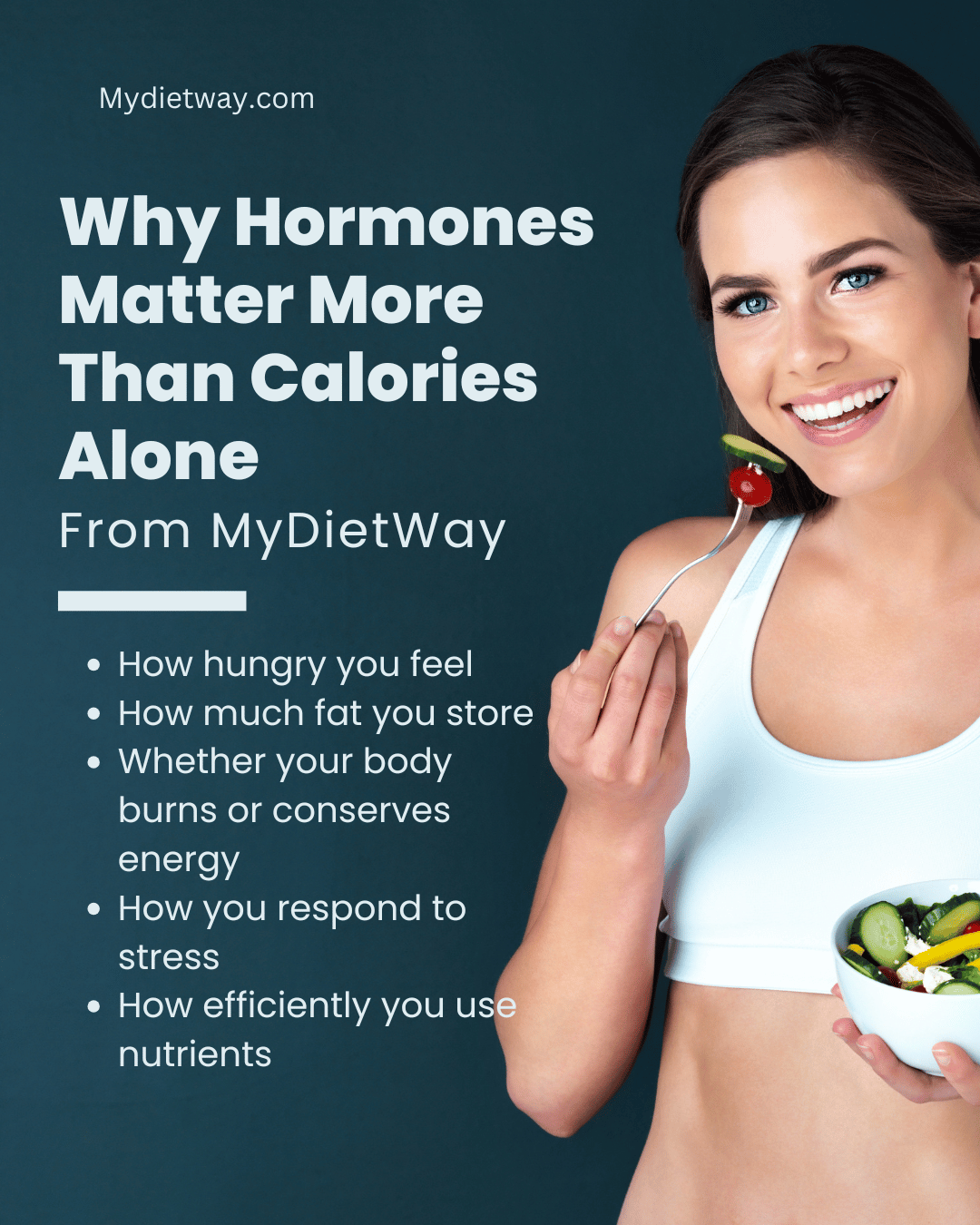
Calories matter—but they don’t work in isolation. Hormones decide:
-
How hungry you feel
-
How much fat you store
-
Whether your body burns or conserves energy
-
How you respond to stress
-
How efficiently you use nutrients
You can eat the “perfect” diet on paper, but if key hormones are out of balance, progress can stall or reverse.
Weight loss is not just about food intake—it’s about how your body responds to that food.
Can Hormones Sabotage Your Diet? The Scientific Answer
Yes—and here’s how
Science is clear: hormonal imbalances can reduce fat loss, increase hunger, slow metabolism, and increase cravings, even when calorie intake is controlled.
The most influential hormones involved in dieting include:
-
Insulin
-
Cortisol
-
Leptin
-
Ghrelin
-
Thyroid hormones
-
Estrogen and testosterone
Each plays a unique role, and when even one is disrupted, dieting becomes harder.
Insulin: The Fat-Storage Gatekeeper
Insulin regulates blood sugar and determines whether calories are used for energy or stored as fat.
When Insulin Sabotages Dieting
-
Frequent blood sugar spikes
-
High refined carbohydrate intake
-
Chronic insulin resistance
This leads to:
-
Increased fat storage
-
Constant hunger
-
Energy crashes
Even a calorie deficit may not work well if insulin levels remain high.
What helps:
-
Protein-first meals
-
Fiber-rich foods
-
Balanced carb intake
👉 Related article: Your 10-Day Keto Belly Fat Meal Plan (Lose Belly Fat the MyDietWay)
Cortisol: The Stress Hormone That Blocks Fat Loss
Cortisol is released during stress—physical or emotional.
How Cortisol Sabotages Your Diet
-
Promotes abdominal fat storage
-
Increases cravings for sugar and salt
-
Breaks down muscle tissue
-
Disrupts sleep
Chronic stress dieting often backfires because the body perceives restriction as a threat.
You cannot out-diet chronic stress.
What helps:
-
Consistent meals
-
Adequate sleep
-
Stress management before calorie cuts
👉 Learn more: Low-Carb vs Low-Fat Diet: What Really Works in 2025? Heart Health Showdown
Leptin: When Fullness Signals Stop Working
Leptin tells your brain when you’ve had enough to eat.
Leptin Resistance Effects
-
You don’t feel full after meals
-
Hunger returns quickly
-
Metabolism slows
This is common after years of dieting or rapid weight loss.
What helps restore leptin sensitivity:
-
Adequate calorie intake
-
Avoiding extreme restriction
-
Regular sleep
-
Strength training
Ghrelin: The Hunger Hormone
Ghrelin increases appetite and is influenced by sleep, stress, and meal timing.
When Ghrelin Works Against You
-
Skipping meals frequently
-
Poor sleep
-
Highly restrictive diets
This leads to:
-
Strong cravings
-
Binge episodes
-
Loss of dietary control
Balanced, regular meals help stabilize ghrelin levels better than extreme dieting.
Thyroid Hormones: Metabolism’s Control Center
Thyroid hormones regulate how fast your body burns calories.
Signs Thyroid Hormones May Be Sabotaging Your Diet
-
Fatigue
-
Cold sensitivity
-
Unexplained weight gain
-
Hair thinning
Even mild thyroid slowdown can reduce calorie burn significantly.
Nutrition support includes:
-
Adequate protein
-
Sufficient iodine, selenium, and zinc
-
Avoiding prolonged starvation diets
👉 Related read: How Metabolism Speed Affects Your Ideal Diet Choice
Sex Hormones: Estrogen and Testosterone Matter
Estrogen (Primarily Women)
-
Influences fat storage location
-
Affects insulin sensitivity
-
Changes throughout life stages
Imbalances can increase fat storage, especially around hips and thighs.
Testosterone (Primarily Men)
-
Supports muscle mass
-
Increases calorie burn
-
Declines with age and stress
Low testosterone can make fat loss harder even with exercise.
👉 Internal link: Dieting for Men vs Women: Key Biological Differences
Age, Hormones, and Diet Resistance
Hormonal changes with age are one of the biggest reasons diets stop working.
Common Age-Related Hormonal Shifts
-
Reduced estrogen or testosterone
-
Increased insulin resistance
-
Slower thyroid output
This explains why diets that worked in your 20s often fail in your 40s and 50s.
👉 Read more: How Age Changes Your Nutritional Needs
Signs Hormones Are Sabotaging Your Diet
You may be dealing with hormonal interference if you experience:
-
Constant hunger despite eating enough
-
Fatigue during calorie restriction
-
Weight gain during stress
-
Strong cravings late at night
-
Plateaus lasting months
These are biological signals, not personal failures.
What Science Says Actually Works
Instead of fighting hormones, successful diets work with them.
Hormone-Friendly Diet Principles
| Strategy | Why It Helps |
|---|---|
| Adequate protein | Stabilizes hunger hormones |
| Balanced meals | Controls insulin |
| Stress management | Lowers cortisol |
| Sleep prioritization | Improves leptin sensitivity |
| Strength training | Supports metabolic hormones |
Consistency beats intensity every time when hormones are involved.
Can You Fix Hormonal Diet Sabotage Naturally?
In many cases, yes—without medication.
Natural Support Strategies
-
Eat enough calories
-
Avoid extreme fasting
-
Manage stress proactively
-
Build muscle
-
Maintain regular sleep
Hormones respond best to safety and consistency, not punishment.
How My Diet Way Addresses Hormonal Weight Loss Challenges
At My Diet Way, we don’t believe in blaming people for biology. Our approach focuses on:
-
Hormone-aware nutrition
-
Sustainable calorie strategies
-
Metabolism support
-
Real-life flexibility
Instead of forcing your body to obey a diet, we help your diet support your body.
🌿 Learn more at: https://mydietway.com/
Frequently Asked Questions (FAQ)
Can hormones really stop weight loss completely?
They can significantly slow or block it until balance is restored.
Do hormones affect men and women differently?
Yes—both experience hormonal sabotage, but through different pathways.
Can dieting itself disrupt hormones?
Yes. Chronic restriction increases cortisol and disrupts leptin and thyroid hormones.
Should I eat less to fix hormone issues?
Often the opposite—eating too little is part of the problem.
How long does it take to rebalance hormones?
Weeks to months, depending on consistency and lifestyle factors.
Final Thoughts
So—can hormones sabotage your diet?
Science says yes. But it also says this sabotage is reversible.
When you stop fighting your biology and start supporting it, dieting becomes less exhausting and far more effective. Hormones are not your enemy—they’re messengers. Learn to listen to them, and your results will finally make sense.
That philosophy is at the heart of everything we do at My Diet Way.
we help from these resources