



How age changes your nutritional needs is one of the most overlooked topics in health and dieting—yet it explains why what worked for you at 25 may completely fail at 45. Aging doesn’t just change your appearance; it changes your metabolism, hormones, digestion, muscle mass, and nutrient absorption.
At My Diet Way, we focus on nutrition that evolves with your life—not outdated advice that assumes your body stays the same forever. This guide is written with a high-SEO, evidence-based approach, but in clear, human language that actually helps you apply it.
If you want long-term health, energy, and weight control, you must eat for your age, not against it.
Why Nutritional Needs Change With Age and How Age Changes Your Nutritional Need ?
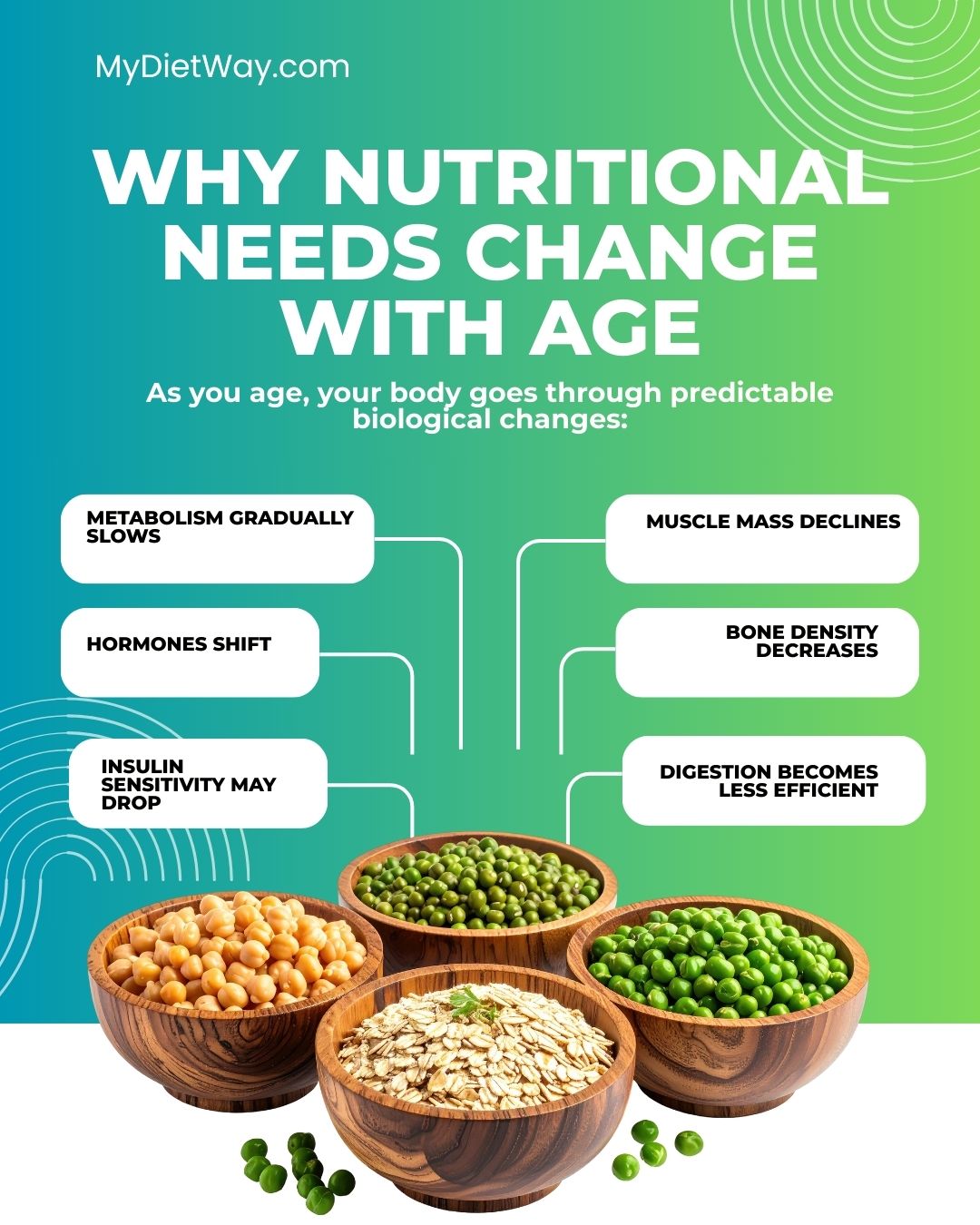
As you age, your body goes through predictable biological changes:
-
Metabolism gradually slows
-
Muscle mass declines
-
Hormones shift
-
Digestion becomes less efficient
-
Bone density decreases
-
Insulin sensitivity may drop
These changes mean your body needs different nutrients, different portions, and different priorities at each life stage.
Aging isn’t the problem. Eating like you’re still in your 20s is.
Nutrition in Your 20s: Building the Foundation
Your 20s are your body’s most resilient decade. Metabolism is at its peak, hormones are relatively stable, and muscle builds easily.
Primary Nutrition Goals in Your 20s
-
Build muscle and bone density
-
Establish healthy eating habits
-
Support high energy and recovery
Key Nutritional Focus
| Nutrient | Why It Matters |
|---|---|
| Protein | Muscle building and recovery |
| Calcium & Vitamin D | Bone strength |
| Healthy fats | Hormone production |
| Iron | Especially important for women |
Common Mistakes in Your 20s
-
Relying on ultra-processed foods
-
Skipping meals
-
Ignoring protein
-
Overdoing alcohol
👉 Related read: How Metabolism Speed Affects Your Ideal Diet Choice
Nutrition in Your 30s: Supporting Hormones and Metabolism
In your 30s, subtle shifts begin. Metabolism starts to slow, stress increases, and hormone balance becomes more sensitive.
What Changes in Your 30s
-
Slight muscle loss begins
-
Insulin sensitivity may decline
-
Stress hormones increase
-
Recovery takes longer
Nutrition Priorities in Your 30s
-
Increase protein intake
-
Reduce refined carbohydrates
-
Prioritize fiber and micronutrients
-
Focus on meal timing consistency
Key Nutrients to Emphasize
-
Magnesium (stress and sleep)
-
Omega-3 fats (inflammation)
-
B vitamins (energy metabolism)
👉 Internal link: Genetic Factors That Influence Weight Loss Success
Nutrition in Your 40s: Protecting Muscle and Hormonal Balance
Your 40s are a critical turning point. Hormonal changes accelerate, and muscle loss becomes more noticeable if nutrition is not adjusted.
Major Biological Shifts
-
Faster muscle loss (sarcopenia)
-
Reduced calorie tolerance
-
Increased fat storage
-
Greater insulin resistance risk
Best Diet Strategy for Your 40s
| Focus Area | Why It Matters |
|---|---|
| Protein | Prevents muscle loss |
| Fiber | Blood sugar control |
| Healthy fats | Hormone support |
| Micronutrients | Slower absorption |
Foods That Become More Important
-
Lean proteins
-
Vegetables and legumes
-
Whole grains in moderation
-
Anti-inflammatory fats
👉 Related article: Dieting for Men vs Women: Key Biological Differences
Nutrition in Your 50s: Preserving Strength and Metabolic Health
In your 50s, nutritional needs become more protective than performance-driven.
Common Changes in Your 50s
-
Decline in estrogen or testosterone
-
Reduced bone density
-
Slower digestion
-
Increased inflammation
Nutritional Goals in Your 50s
-
Preserve muscle mass
-
Protect bones and joints
-
Maintain blood sugar stability
-
Support heart health
Critical Nutrients in Your 50s
| Nutrient | Benefit |
|---|---|
| Protein | Muscle preservation |
| Calcium | Bone health |
| Vitamin D | Nutrient absorption |
| Potassium | Blood pressure control |
Portion control becomes more important—not extreme restriction, but smarter balance.
Nutrition in Your 60s: Supporting Longevity and Independence
In your 60s, nutrition directly impacts quality of life, mobility, and independence.
Biological Considerations
-
Reduced appetite
-
Lower stomach acid
-
Decreased nutrient absorption
-
Higher risk of deficiencies
Smart Nutrition Strategies in Your 60s
-
Nutrient-dense meals
-
Smaller, protein-rich portions
-
Easy-to-digest foods
-
Consistent hydration
Foods to Prioritize
-
Soft proteins (fish, eggs, yogurt)
-
Cooked vegetables
-
Healthy fats
-
Calcium-rich foods
👉 Internal link: The Complete Beginner’s Guide to the Keto Diet How It Works for Weight Loss
Protein Needs Increase With Age
One of the biggest nutritional myths is that protein needs decrease with age. In reality, they increase.
Why Older Adults Need More Protein
-
Prevents muscle loss
-
Improves strength
-
Supports immune function
-
Aids recovery
| Age Group | Protein Priority |
|---|---|
| 20s | Muscle building |
| 30s–40s | Muscle maintenance |
| 50s–60s | Muscle preservation |
Carbohydrates and Age: Less Is Often More
As insulin sensitivity declines with age, carbohydrate tolerance may decrease.
Smarter Carb Choices Over Time
-
Favor whole grains over refined carbs
-
Pair carbs with protein
-
Reduce late-night carb intake
-
Focus on fiber-rich sources
This doesn’t mean cutting carbs entirely—it means choosing better ones.
Micronutrient Absorption Declines With Age
Older adults absorb nutrients less efficiently due to changes in digestion.
Nutrients Commonly Affected
-
Vitamin B12
-
Iron
-
Calcium
-
Magnesium
This makes food quality more important than calorie quantity.
Hydration Needs Change With Age
Thirst signals weaken with age, increasing dehydration risk.
Hydration Tips by Age
-
Drink consistently, not reactively
-
Include water-rich foods
-
Limit excessive caffeine
-
Monitor urine color as a guide
How Lifestyle Affects Age-Related Nutrition
Nutrition does not work alone. Aging nutrition is strongly influenced by:
-
Sleep quality
-
Stress levels
-
Physical activity
-
Medication use
Diet must adapt to real life, not ideal scenarios.
How My Diet Way Supports Age-Specific Nutrition
At My Diet Way, we don’t believe in age-shaming diets. We believe in age-smart nutrition that evolves with your body.
Our approach focuses on:
-
Metabolism-aware eating
-
Hormone-friendly nutrition
-
Sustainable habits
-
Long-term health outcomes
🌿 Learn more at: https://mydietway.com/
Frequently Asked Questions (FAQ)
Do calorie needs decrease with age?
Yes, slightly—but nutrient needs often increase.
Why is weight loss harder after 40?
Hormonal changes, muscle loss, and insulin sensitivity all play a role.
Should older adults eat less protein?
No. Most need more protein, not less.
Is intermittent fasting safe as you age?
It depends on health status, metabolism, and stress levels.
Can good nutrition slow aging?
It can significantly improve health span, mobility, and energy.
Final Thoughts
Understanding how age changes your nutritional needs is essential for lifelong health. Eating well isn’t about eating less as you age—it’s about eating smarter. When nutrition evolves with your body, you protect muscle, energy, metabolism, and independence.
Your age doesn’t limit you.
Ignoring it does.
And that’s why age-aware nutrition is at the core of everything we teach at My Diet Way.
We help from these resources